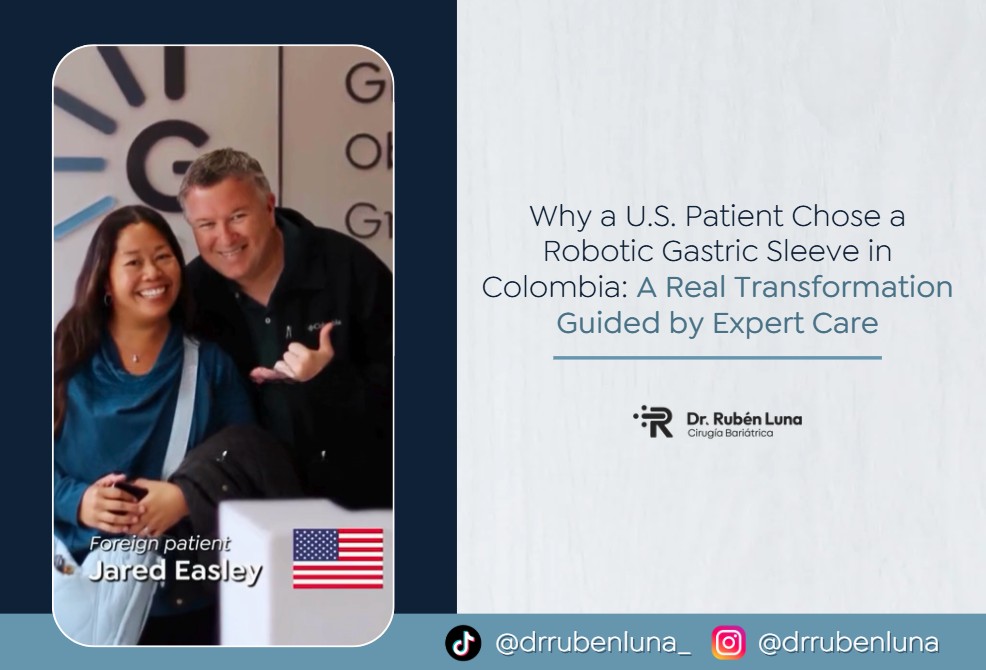
Why a U.S. Patient Chose a Robotic Gastric Sleeve in Colombia: A Real Transformation Guided by Expert Care
Every week I meet people from different parts of the world searching for a safe and effective path to transform their health. But some stories capture me from the very beginning—stories like Jared’s. His journey is more than a gastric sleeve success story; it is a testimony to what truly happens when a patient finds clarity, trust, and a medical team willing to guide them step by step.
Jared traveled from Fort Lauderdale, Florida, but his decision began long before boarding a plane. Like many patients exploring bariatric surgery for international patients, he spent months researching options, comparing techniques, and reading experiences online. He wanted a procedure that was minimally invasive, reliable, and performed by an experienced surgeon. Still, he wasn’t fully convinced that the robotic gastric sleeve in Colombia was the right choice—until one conversation changed everything.
Table of contents
A Success Story That Begins With Doubt: Jared’s Journey From Florida to Bogotá
I remember our first video call clearly. Jared joined the call with his wife, who understandably had many questions. Both needed to feel completely secure before moving forward. During that conversation, I answered each of their concerns with total transparency, explained the robotic technique I use, and described what their entire journey would look like—from preparation in the United States to their recovery days here in Bogotá. By the end of the call, something shifted. His wife looked relieved, and Jared expressed, for the first time, that he finally felt confident about taking the next step.
That trust didn’t come from a single answer; it came from a process. Before traveling, they received personalized orientation, preoperative guidance, and a clear timeline of what to expect. My team ensured they understood every phase of the surgery and recovery. No question went unanswered. No detail was left unclear. When Jared landed in Bogotá, he already knew exactly what the next days would look like.
For international patients, this level of preparation is not optional, it is essential. Traveling to another country for surgery requires certainty, structure, and constant communication. By the time I met Jared in person, he wasn’t just “ready for surgery”—he was calm, informed, and confident in the decision he had made alongside his family.
Inside the Experience: What Robotic Gastric Sleeve Recovery Really Felt Like
When patients ask me, what recovery feels like after a three-incision robotic gastric sleeve, I always answer the same way: recovery depends on the precision of the technique, the patient’s preparation, and the quality of postoperative guidance. In Jared’s case, all three elements aligned perfectly, allowing him to experience what truly defines a minimally invasive bariatric surgery—a smoother, faster, and more comfortable transition into this new stage of life.
Jared arrived in Bogotá fully informed. He knew that robotic surgery allows me to operate with exceptional accuracy using the Da Vinci platform, reducing tissue trauma and minimizing the discomfort associated with traditional approaches. Unlike conventional laparoscopy, where the instruments have fixed movement angles, robotic arms rotate with a degree of precision greater than the human wrist. This fine control is what makes the gastric sleeve recovery experience significantly less painful and more predictable.
And that’s exactly what happened.
His recovery: honest, real, and surprisingly steady
The first 24 hours after surgery are often the phase that worries patients the most. Jared shared with me that his pain peaked at “7 out of 10,” which is within the expected range during the first hours. What stood out, however, was how quickly that discomfort decreased. With correct analgesia and early mobility—a pillar of my postoperative protocol—he regained confidence in his body almost immediately.
By the end of his third postoperative day, Jared walked 7,000 steps. For many patients, this number is difficult to imagine so soon after surgery, but mobility is one of the clearest indicators of successful healing. Robotic precision reduces internal inflammation, allowing the body to move without intense resistance or sharp pain.
He followed his liquid diet and mobility guidelines with discipline, and to my satisfaction, he required no readjustments or additional interventions. He also mentioned something I hear often from robotic surgery patients: he expected to feel more tired. Instead, he found himself alert, independent, and capable of doing more than he anticipated.
Why robotic techniques change everything
Although both robotic surgery and laparoscopy are minimally invasive, they are not equal in their impact on recovery. Here is what Jared experienced firsthand:
- Less pain: because robotic instruments avoid unnecessary traction or pressure on surrounding tissues.
- Earlier mobility: allowing patients to walk within hours and achieve significant step counts during the first days.
- Smaller scars: only three tiny incisions, strategically placed for discreet healing.
- Greater precision and safety: the robot enhances visualization and fine movements, reducing surgical risk.
For me, Jared’s progress was not surprising, it was consistent with what I expect from this technique. But for him, it was life changing. He repeatedly expressed that the ease of his recovery confirmed that choosing a robotic approach was the right decision.
His experience reflects what I see every week: when surgery combines preparation, expertise, and robotic technology, recovery simply becomes a different—and far more positive—experience.
A Patient-Centered Experience: What International Patients Value Most
Every international patient who travels for bariatric surgery in Colombia for U.S. patients comes with a unique mix of expectations, fears, and logistical concerns. For that reason, my team and I have designed a care model that prioritizes clarity, emotional safety, and continuous support—even before the patient arrives in the country.
Jared’s process is a perfect example of this.
Guidance starts long before the flight
From our first virtual appointment, Jared and his wife received a step-by-step explanation of the surgical plan, the technology involved, preoperative requirements, and the anticipated timeline of recovery. These video calls are essential. They allow patients to ask questions freely, share their concerns, and understand how robotic technique works in a non-technical, approachable way.
After confirming he was a candidate, my coordination team provided:
- A detailed pre-operative checklist
- Clear instructions about the documents and exams needed
- Support with travel scheduling
- Guidance on where to stay in Bogotá
- Continuous communication with his wife, who played a fundamental role in his decision
This level of preparation is something patients frequently highlight. It reduces anxiety, avoids last-minute surprises, and gives their families peace of mind.
What international patients value most
Patients coming from the United States, Canada, Europe, and the Caribbean share similar priorities: safety, transparency, and human support. They want to know that they can trust their medical team—not only in the operating room, but throughout the entire journey.
That is why we maintain constant communication with the patient and their family. Every message is answered promptly; every doubt is resolved with honesty. Jared mentioned repeatedly that he appreciated how “nothing was left unclear.” That is exactly what we aim for.
More than surgery: a comprehensive, year-long care model
One of the strongest pillars of our program is the Global Obesity Group, a multidisciplinary structure designed to accompany patients for 12 full months. This team includes:
- Nutrition specialists
- Psychology and mental health experts
- Functional medicine physicians
- Physical activity and metabolic rehabilitation professionals
International patients value this model because it prevents the feeling of being “on their own” once they return home. Instead, they continue receiving guidance, follow-ups, and tailored adjustments through virtual appointments. Whether they are in Florida, New York, Madrid, or Toronto, they remain connected and supported.
Kindness, transparency, and true preparation
Jared described his experience with one word: “outstanding.” What stood out most to him was how kind, organized, and responsive the team was—from the moment he sent his first message until the day he began walking independently after surgery. For him and his wife, the emotional reassurance and the professional structure surrounding the process were just as important as the procedure itself.
This is the essence of a true patient experience gastric sleeve journey. It goes beyond medical steps. It is about understanding the person, respecting their fears, and guiding them with warmth and precision. And it is also what defines our international patient support bariatric surgery model: personalized, human, safe, and transparent at every stage.
What Makes the Three-Incision Robotic Technique Different?
When patients search for a robotic sleeve gastrectomy Colombia, they often find general information that does not fully explain the real advantages of robotic surgery—or how much those advantages can vary depending on the surgeon’s technique. In my practice, I have developed a refined approach known as the three-incision bariatric surgery, a method that allows me to perform a complete robotic gastric sleeve using only three minimal entry points. This is far fewer than the traditional multi-port robotic approach and even fewer than many laparoscopic techniques.
A technique designed for precision and comfort
The purpose of this refined method is simple: to reduce surgical trauma while maintaining the highest level of precision. Robotic technology provides me with enhanced vision, improved dexterity, and the ability to perform fine, controlled movements that are impossible to replicate with human hands alone. By using only three small incisions, I minimize the physical impact on abdominal tissues, something patients can feel immediately after surgery.
As a robotic bariatric expert Bogotá, I have seen firsthand how this technique transforms the postoperative experience. The combination of fewer incisions and robotic precision creates a recovery pathway that is smoother, less painful, and significantly more predictable.
Explained in simple terms: why this technique matters
Even though this is an advanced surgical approach, its benefits can be understood clearly without relying on medical terminology:
- Enhanced surgical precision: The robotic platform allows a level of accuracy superior to human wrist movement. This means less tension on tissues and safer maneuvers throughout the sleeve creation.
- Less post-operative pain: With fewer incisions and less internal tissue manipulation, patients typically report lower pain levels during the first days.
- Faster return to daily routines: Early mobility is one of the clearest indicators of recovery. Patients often walk within hours and resume gentle activities earlier than expected.
- Better cosmetic outcome: Only three tiny incisions leave minimal scarring—an important factor for many of my patients.
- Lower complication rate: Precision reduces bleeding, inflammation, and risk of internal injury, leading to safer long-term outcomes.
These benefits are not theoretical; they are consistently demonstrated in real patients.
Jared’s case: proof that technique shapes recovery
Jared’s recovery illustrates exactly how this approach works in practice. Three days after surgery, he was not only walking comfortably but achieving 7,000 steps, a remarkable milestone for someone so early in the postoperative phase. His pain was manageable, his fatigue was lower than expected, and he had no complications—a pattern I see repeatedly in patients who undergo the robotic technique.
He also mentioned that he expected to feel fragile or dependent on others, but the combination of precise surgery and controlled incisions allowed him to regain independence almost immediately.
Advanced, accessible, and designed for international patients
One of the greatest misconceptions about robotic surgery is the assumption that it is prohibitively expensive. Traditional robotic procedures often require multiple incisions and complex port systems, which can increase costs significantly. However, by optimizing the technique to only three ports, I reduce operative time, minimize resources, and simplify the procedure—making it more affordable than multi-port robotic surgery while maintaining all the advantages of advanced technology.
This is one of the reasons why many international patients choose Bogotá for their procedure. They receive world-class robotic surgery with superior outcomes at a cost far lower than what they would face in the United States or Europe.
The three-incision bariatric surgery technique is not just a surgical preference, it is the result of years of refinement, consistent results, and the commitment to offering patients the safest and most advanced bariatric solution available.

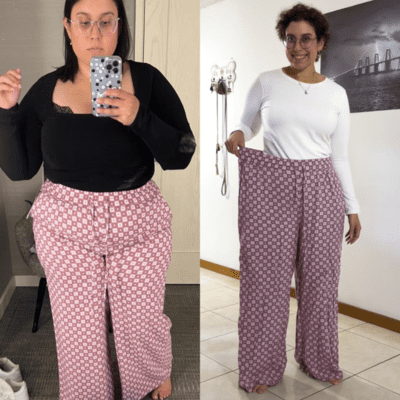
Why Patients Trust Dr. Rubén Luna: Expertise, Innovation, and Proven Outcomes
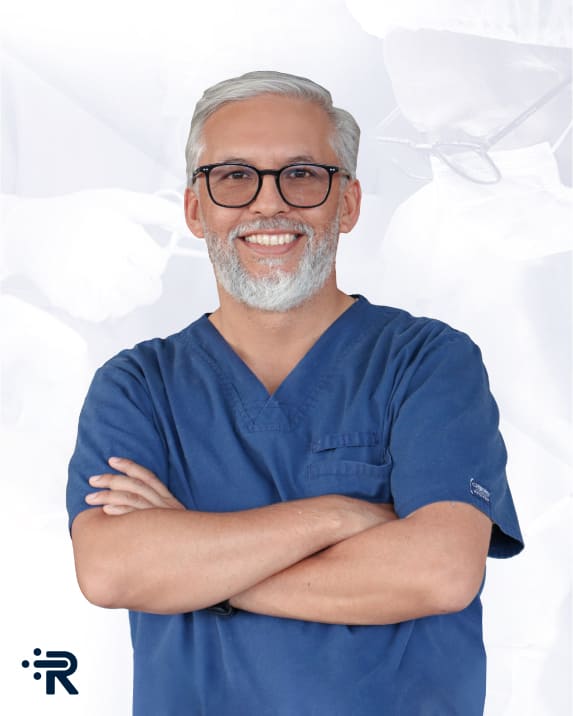
Many patients who look for the best bariatric surgeon in Colombia choose my practice because I combine more than 17 years of experience with a strong commitment to safety and innovation. As a pioneer of the three-incision robotic bariatric surgery technique in the country, I have treated over 4,500 patients from Colombia and abroad, always prioritizing a human, ethical, and patient-centered approach. I operate exclusively in high-complexity centers such as Clínica Shaio, where international standards of safety are guaranteed.
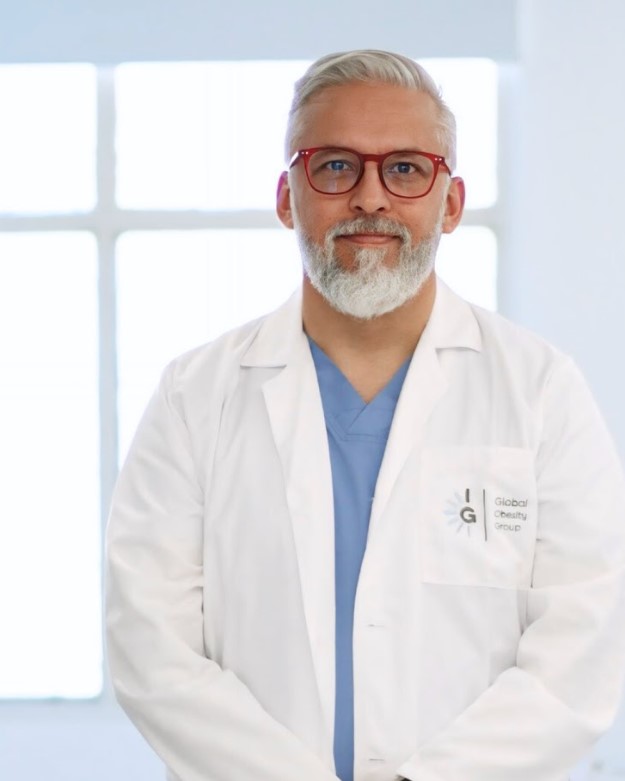
Jared’s experience reflects what many international patients value most: clear communication, kindness, and a team that guides them from the first virtual consultation to the structured one-year follow-up with our multidisciplinary group. If you are looking for a trusted bariatric surgeon Bogotá, I invite you to schedule an online evaluation so we can review your case and determine whether robotic surgery is the right option for you.
Frequently Asked Questions (FAQ)
1. Is the three-incision robotic gastric sleeve safe for international patients traveling to Colombia?
Yes. Safety is my top priority, especially for international patients who travel long distances for surgery. Before your arrival, we complete a full virtual evaluation, review your medical history, request the necessary pre-operative exams, and coordinate your itinerary so that everything is ready when you land in Bogotá. The procedure itself is performed in a high-complexity center with strict safety protocols and advanced monitoring systems. Most patients are able to walk within hours, recover comfortably, and fly back home within the recommended timeframe. My team and I remain in constant communication throughout your stay and once you return to your country.
2. What makes robotic surgery different from traditional laparoscopic surgery?
Robotic surgery offers a level of precision far superior to conventional laparoscopy. The robotic platform enhances my vision, dexterity, and control during every step of the procedure. This translates into less tissue trauma, reduced bleeding, minimal postoperative pain, and a smoother recovery. With the three-incision technique, these advantages become even more evident: fewer entry points in the abdomen mean fewer scars, less discomfort, and a faster return to daily activities. Patients often describe robotic recovery as surprisingly manageable compared with what they expected.
3. How long should I stay in Bogotá after the procedure?
Most patients stay in Bogotá for 7 to 10 days after surgery. This period allows me to monitor your recovery closely, ensure you tolerate the postoperative diet well, and confirm there are no complications. During this time, you will attend follow-up appointments with me and receive support from our multidisciplinary team. Once you are stable, comfortable, and progressing appropriately, you can return home safely. My team continues to support you virtually during the following months.
4. How painful is the recovery after a three-incision robotic sleeve?
Pain varies from person to person, but most robotic patients report less discomfort compared with traditional approaches. Jared, for example, described his highest pain level as a 7 out of 10 during the first hours, which then decreased steadily. With adequate pain control, early mobility, and careful guidance, recovery becomes far more manageable. Many patients walk on the same day of surgery and achieve significant mobility milestones within the first 72 hours. The reduced pain is one of the major advantages of using robotic technology.
5. What results can I expect in the first days after robotic gastric sleeve surgery?
During the first days, patients typically experience gradual improvements: less pain, better mobility, and increased confidence in their recovery. For instance, Jared was able to walk 7,000 steps on the third day—something that reflects how effective the robotic technique is in reducing inflammation and promoting early return to movement. You can expect to follow a structured diet progression, begin gentle physical activity, and have continuous guidance from our team. Each milestone is monitored to ensure you are advancing safely.
6. Is robotic bariatric surgery more expensive than laparoscopic surgery?
Traditional multi-port robotic surgery can be more expensive due to additional equipment and operation time. However, my three-incision technique optimizes the robotic approach, making it more efficient and reducing unnecessary expenses. As a result, patients receive all the benefits of robotic precision at a more accessible cost—especially compared with prices in the United States and Europe. This balance between advanced technology and affordability is one of the reasons many international patients find Colombia such a reliable destination.
7. What long-term support is available once I return to my home country?
One of the strongest pillars of my practice is long-term care. Through the Global Obesity Group, patients receive virtual follow-ups for an entire year. This includes appointments with nutrition professionals, psychologists, functional medicine specialists, and physical activity experts. Our goal is to ensure you not only heal well but also develop sustainable habits that support lasting weight-loss success. Even when you are back home, you remain connected to a complete medical team.
8. Will I need someone to accompany me during the trip and recovery?
While having a companion is helpful—especially for emotional support—it is not mandatory. Our team provides detailed instructions, transportation guidance, and close monitoring during your stay. Many patients travel alone, and we ensure they feel supported and safe throughout the process. If you do travel with a family member, we include them in all explanations to help them understand your needs and the postoperative plan, just as I did with Jared and his wife.
9. Will the scars from the three-incision technique be noticeable?
The cosmetic result of this technique is one of its greatest benefits. With only three very small incisions—placed in areas where they heal discreetly—scarring tends to be minimal and often barely visible after a few months. Unlike traditional approaches that require multiple ports, the three-incision method avoids unnecessary marks on the abdomen. Most patients are pleasantly surprised by how well the incisions heal and how little they affect their confidence or daily life.
10. How do I know if I am a candidate for robotic gastric sleeve surgery?
The best way to know if this procedure is right for you is through a personalized evaluation. During our virtual consultation, I review your medical history, weight trajectory, comorbidities, lifestyle, and expectations. Not all patients need the same type of surgery, and my role is to guide you toward the safest and most effective option for your specific needs. If the robotic sleeve is appropriate, I explain every step of the process, just as I did with Jared. If another approach suits you better, I guide you honestly and transparently.