Bariatric robotic surgery in Colombia: safety, costs and benefits
Robotic bariatric surgery can sound intimidating—until you understand what it actually changes (and what it doesn’t).
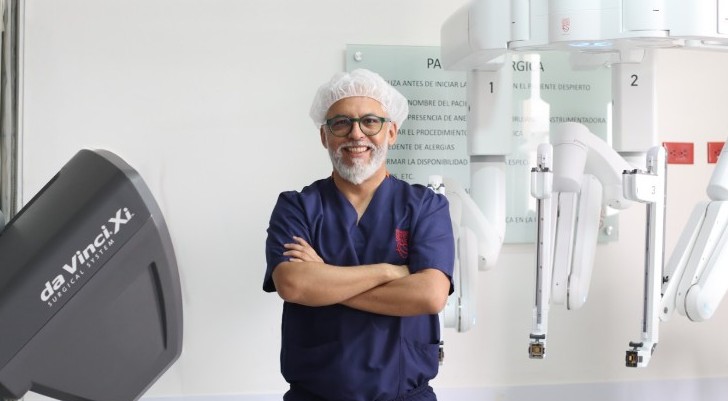
I’m Dr. Rubén Luna, a bariatric surgeon in Bogotá, and here’s the simple truth: bariatric surgery was already a safe, well-established procedure when it’s done with the right evaluation, protocols, and an experienced team. Robotic surgery doesn’t “replace” that safety—it builds on it. The robot is a tool that gives me more precision, steadier control, and better visualization in key steps of the operation. And when you combine that technology with solid clinical standards, you’re not chasing trends—you’re reducing variables.
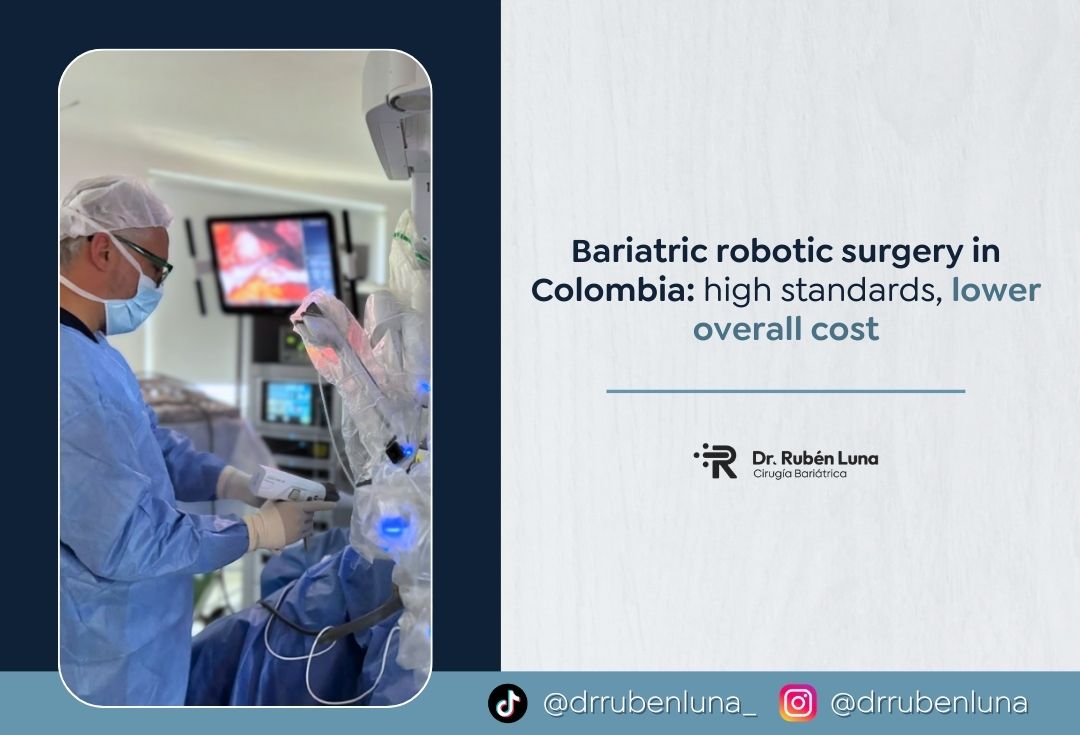
Now, if you’re exploring robotic bariatric surgery, I want you to know Colombia deserves a spot on your shortlist. We have highly trained medical teams, modern hospitals, and the same minimally invasive standards you’d expect in top countries—often at a significantly lower overall cost. For many of my patients, it’s the chance to access advanced technology like robotic surgery without compromising on quality, safety, or follow-up.
What is the robotic surgery?
Robotic surgery is a way of doing minimally invasive surgery using a robotic-assisted platform that I control 100%. It doesn’t operate on its own, and it’s not “AI making decisions.” Think of it like advanced surgical instrumentation: it takes my hand movements and translates them into very precise, steady motions inside your body, using a high-definition camera and specialized tools.
Today, surgeons use robotic surgery in many fields—urology (like prostate surgery), gynecology (hysterectomy and endometriosis), general surgery (hernia repairs), colorectal surgery, thoracic surgery, and more. And yes, it’s also used in bariatric surgery, especially when precision and control make a meaningful difference in key steps of the operation.
Robotic surgery da Vinci: how the system supports precision in minimally invasive surgery
The platform most people are referring to is the da Vinci robotic system. In simple terms, it’s a system with a surgical console (where I operate), a patient-side unit with robotic arms that hold the instruments, and a camera that gives me a stable, magnified 3D view. That combination helps me work with more control and visibility in delicate areas—still through small incisions, still as a minimally invasive procedure.
Is robotic surgery laparoscopic in practice? Similar access, different control
Yes—robotic surgery is laparoscopic in practice, because we access the abdomen through small incisions and use a camera to guide the procedure. What changes is the way the surgeon controls the instruments and the level of visualization and dexterity we can achieve. Below I’ll break down what stays the same and what’s different compared with traditional laparoscopic surgery.
What stays the same between robotic surgery and traditional laparoscopy
- Small incisions instead of a large open incision.
- Camera-guided surgery with a view inside the abdomen.
- Minimally invasive recovery, which is typically faster than open surgery.
- Same core surgical goals and the same safety principles (patient selection, protocols, experienced team).
What changes between robotic surgery and traditional laparoscopy
- Wristed instruments that move with more degrees of freedom than standard laparoscopic tools.
- Stable 3D vision with depth perception and magnification.
- Refined movement in tight spaces, which can help with precision in complex steps.
- More stable control of camera and instruments throughout the case.
You might be interested: The truth about metabolic surgery and why patients travel to Colombia for it
What is the bariatric robotic surgery?
Now that you already know what robotic surgery is, let me put it into the bariatric context. Bariatric robotic surgery means we perform weight-loss surgery using a minimally invasive approach—small incisions, a camera, and specialized instruments—but with robotic assistance to improve control and precision during key steps. The goal is the same as any high-quality bariatric procedure: a safe operation, predictable healing, and long-term metabolic and weight-loss benefits, always based on a clear medical evaluation.
In my practice, I mainly use robotic assistance for two procedures: gastric bypass and gastric sleeve. Both are proven, safe options when they’re correctly indicated. And because they’re different surgeries with different mechanisms, I’m going to walk you through each one next, in a very straightforward way.
Gastric sleeve robotic surgery: consistency along the staple line
A gastric sleeve (sleeve gastrectomy) is a procedure where we reduce the size of the stomach, creating a narrower “sleeve.” That helps you feel full sooner, supports portion control, and also influences hunger hormones for many patients. It’s a powerful option when it’s properly indicated, and it’s done with a stapling technique that requires careful alignment and consistent execution along the stomach.
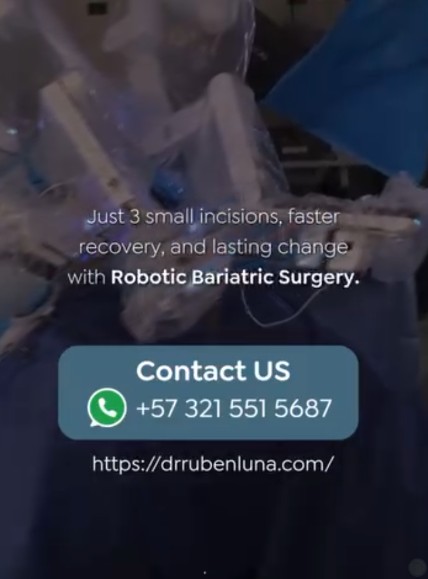
With robotic assistance, I can work with stable visualization and fine control during the dissection and along key steps related to the staple line. And at Global Obesity Group, we’ve implemented a technique that allows us to perform gastric sleeve robotic surgery through 3 incisions instead of the 4 incisions commonly used in traditional approaches.
You might be interested:Understanding Gastric Sleeve Cost: A Medical Comparison Between Colombia and the USA
Gastric bypass robotic surgery: precision for reconstruction steps
A gastric bypass works by creating a small stomach pouch and rerouting a portion of the small intestine, so you eat less and absorb fewer calories—and for many patients, it also has a strong metabolic effect that helps with conditions like type 2 diabetes. It’s a procedure that involves several precise reconstruction steps (think: connections between the stomach and intestine), and that’s where robotic assistance can be especially helpful—steady 3D visualization, controlled movement, and refined suturing when needed.
At Global Obesity Group, my multidisciplinary team and I have implemented a technique that allows us to perform gastric bypass robotic surgery through 4 incisions instead of the 5 incisions commonly used in traditional approaches.


Benefits of robotic surgery
When people ask me why I use robotics, I keep it simple: the robot doesn’t make surgery “automatic”—it makes the surgeon’s work more controlled. In minimally invasive surgery, small differences in visibility and precision can matter, especially in longer cases or in steps where the margin for error is small. These are the benefits I see most consistently in real operating-room terms.
General benefits of robotic surgery
Robotic surgery offers broad advantages that apply across many specialties—not just bariatrics.
Enhanced precision and controlled movement
The robotic system translates my hand movements into very steady, refined motions, filtering out small tremors and allowing micro-adjustments. That can be especially valuable when I’m working near sensitive structures or doing detailed dissection.
High-definition 3D visualization for better depth perception
Instead of a flat 2D view, the 3D camera gives depth perception and magnification. For you, that matters because better visualization helps the surgeon identify tissue planes more clearly and work more confidently in delicate steps.
Improved dexterity in narrow or difficult angles
Traditional laparoscopic instruments are straight and have limited range of motion. Robotic instruments “wrist” inside the body, which helps me work around corners and in tighter spaces with more natural, precise movements.
Stable camera platform for consistent visualization
In robotic cases, the camera is stable and directly controlled by the surgeon at the console. That consistency reduces interruptions and helps maintain a clear view throughout the procedure.
Ergonomics that support steadiness in longer cases
This one is less talked about, but it matters: better ergonomics can reduce physical fatigue for the surgeon during long operations. And in surgery, steadiness and focus are part of quality—especially from start to finish.
Robotic bariatric surgery-specific benefits
In bariatric surgery, the benefit is not “because it’s robotic,” but because certain bariatric steps require consistent technique, careful tissue handling, and sometimes suturing or reconstruction. Robotics can support that precision when it’s the right fit for your case.
More controlled suturing when reinforcement or reconstruction is needed
In procedures like gastric bypass—and sometimes in sleeve cases depending on the plan—suturing can be part of reinforcement or reconstruction. Robotic assistance can make suturing feel more controlled and precise, which supports consistency in those steps.
Greater precision around delicate tissue planes
Bariatric surgery involves working through specific anatomical planes where careful technique matters. Better visualization plus refined instrument control helps me stay precise and gentle with tissue handling.
Helpful in complex anatomy
Not every patient has the same anatomy. In cases with more challenging anatomy, prior abdominal surgery, or situations that require extra precision, the robotic platform can be a useful advantage—always case-dependent, never a one-size-fits-all promise.
Supports consistent technique in key bariatric steps
In bariatric surgery, consistency is everything: the same safe sequence, the same checkpoints, the same attention to detail. The robotic system supports that consistency by giving stable visualization and refined control during the steps that matter most.
Robotic surgery safety: what truly protects patients
When we talk about safety, I always bring it back to the same point: the robot is a tool, but the real safety comes from the system around the surgery—how we evaluate you, how we plan the case, how the team works, and how we follow you afterward. Robotic assistance can add precision and control, but the foundation is still medical judgment, standardized protocols, and a disciplined approach to risk reduction.
Is robotic surgery safe? The role of standardized protocols
Yes—robotic surgery is safe when it’s done under standardized protocols, just like traditional laparoscopy. What I mean by “protocols” is that we don’t improvise: we follow structured steps for patient selection, pre-op preparation, surgical technique, infection prevention, blood clot prevention, anesthesia planning, and post-op monitoring. That structure is what lowers risk and makes outcomes more predictable, regardless of the technology used.
Team-based safety: anesthesia, nursing, and bariatric coordination
A safe bariatric surgery isn’t just about the surgeon—it’s about the whole team moving in sync. Anesthesia manages airway safety, ventilation, pain control, and hemodynamic stability; nursing keeps the OR workflow precise and sterile; and the bariatric coordination team ensures your pre-op workup, in-hospital care, and post-op plan are consistent. This teamwork matters even more for international patients, because the timeline is tight and everything has to be organized and clear before you travel.
Is robotic surgery better?
In my view, robotic surgery isn’t “better” because other techniques are unsafe—modern laparoscopic bariatric surgery is also highly safe and effective when done well. The reason I offer robotics is that, in the right patient and the right procedure, it can bring additional advantages: more precise control, better visualization, and smoother execution of technically demanding steps. So I don’t sell it as a replacement—I offer it as an upgrade when it truly adds value.
You might be interested: Real people, real change: Successful bariatric surgery stories


How I evaluate safety before, during and after robotic bariatric surgery (especially for patients flying to Colombia)
If you’re coming to Colombia for surgery, my goal is to make the process feel structured and predictable. That means we plan safety in three phases—before you travel, the day of surgery, and after you go back home—so you’re not guessing what happens next.
Pre-op assessment: risk reduction starts before you travel
- Virtual consultations to understand your goals, symptoms, weight history, and prior treatments.
- A detailed review of your medical conditions (diabetes, hypertension, sleep apnea, reflux, etc.).
- Pre-op lab work and studies to evaluate your health status (based on your individual profile).
- Review of medications and supplements, with clear instructions on what to adjust or pause.
- Coordinated planning with the multidisciplinary team so the surgical plan matches your needs.
- A clear timeline so you arrive with everything ready—no last-minute surprises.
The day-of-surgery safety checklist and protocols
- Strict pre-op preparation and confirmation of fasting, medications, and safety checks.
- A controlled clinical environment with sterile protocols and standardized OR workflow.
- Anesthesia safety planning tailored to bariatric patients (airway, ventilation, pain control).
- Prevention protocols for blood clots (DVT) and infection, applied systematically.
- Step-by-step surgical execution with defined checkpoints—no rushed decisions.
- Immediate post-op monitoring in a safe setting before discharge planning begins.
After bariatric surgery safety: recovery guidance, follow-up schedule, and red flags
- A structured remote follow-up plan after you return home, with scheduled check-ins.
- Clear guidance on hydration, nutrition phases, and mobility to support recovery.
- Ongoing coordination with the team for questions, symptom review, and progress tracking.
- A simple list of red flags (warning signs) so you know exactly when to contact us urgently.
- Support to keep your post-op plan consistent across borders—because follow-up is part of safety.
Cost of robotic surgery vs traditional surgery in bariatric care
After everything I’ve explained—better visualization, refined control, and the added advantages robotics can bring in key steps—it’s fair to say this clearly: robotic bariatric surgery is usually more expensive than traditional laparoscopic surgery. That doesn’t mean it’s “better for everyone,” but it does reflect the resources involved.
The main reasons come down to technology and operating-room logistics. Robotic platforms have higher fixed costs (equipment, maintenance, specialized instruments), and they require a team that’s trained and organized around that system. In some cases, robotic surgery can also involve different OR setup and time allocation. So you’re not just paying for a “robot”—you’re paying for an advanced surgical environment designed to support precision and consistency.
You might be interested: Understanding Gastric Sleeve Cost: A Medical Comparison Between Colombia and the USA
Cost of robotic surgery vs traditional surgery in bariatric care in Colombia
If you’re comparing countries, this is where the conversation becomes much more practical. Yes—robotic surgery tends to cost more than traditional laparoscopy within the same country. But Colombia is often the place where patients realize they can access advanced technology, high clinical standards, and a structured bariatric program without paying the pricing seen in many top-tier markets.
Colombia vs other countries: why overall costs are often lower
In Colombia, medical procedures—including robotic bariatric surgery—typically have lower overall costs than in the United States, Canada, and several European countries. That’s driven by differences in healthcare cost structures, not by “lower standards,” and it’s one of the reasons Colombia has become a serious option for patients looking for high-quality care.
Robotic vs traditional: higher within Colombia, often competitive internationally
Even here, robotic surgery is usually more expensive than traditional laparoscopic surgery, because of the platform, specialized instruments, and operating-room resources involved. But compared internationally, robotic bariatric surgery in Colombia can be more affordable than traditional bariatric surgery in other countries—and for some patients, that’s the comparison that matters most.
Fewer incisions, smarter resource use: how our technique can reduce costs
At Global Obesity Group, we’ve implemented techniques that allow robotic bariatric surgery to be performed with fewer incisions. In practical terms, that can also lower costs because we can omit the use of one robotic arm, which reduces instrument and platform utilization—while keeping the same priority: safety, precision, and consistent outcomes.
Reasons to choose robotic bariatric surgery in Colombia
Bogotá hospitals and infrastructure
Bogotá offers modern, high-complexity hospitals where robotic bariatric surgery can be performed with the same safety standards you’d expect from top international centers.
Advanced tech and expert teams
You get access to robotic platforms and a trained multidisciplinary team that knows bariatric care inside and out—from surgery to nutrition and long-term follow-up.
International coordination
If you’re traveling, we keep it organized with virtual planning and a clear timeline so you know exactly what to do before you arrive and what happens after surgery.
High quality, lower overall cost
Colombia often delivers excellent clinical quality with more cost-efficiency compared with many countries, especially when you’re comparing robotic technology access.
Follow-up you can count on
I structure a follow-up pathway that continues after you return home, with remote check-ins and clear guidance so you’re never managing recovery alone.
Contact us to learn more about robotic bariatric surgery in Bogotá, Colombia
If you’ve been thinking about taking this step, I want you to know you don’t have to figure it out alone. My job is to help you make a clear, safe decision—based on your health, your goals, and what will truly work long-term. And if Colombia is on your radar, I’ll make sure you understand exactly what the process looks like here, from evaluation to recovery, with the same standards you’d expect from top medical centers.
Schedule your virtual consultation for robotic bariatric surgery
A virtual consultation is where we turn questions into a real plan. I’ll listen to your story, review your medical history and exams, and explain—without confusing language—whether a sleeve or bypass is the right fit for you, and why. We’ll go step by step: safety, timeline, travel planning if needed, and follow-up after you return home. If we’re a good match, we’ll meet in consultation and move forward with confidence.
FAQs about bariatric robotic surgery
Is robotic surgery safe?
Yes—robotic surgery is safe when it’s done by an experienced surgical team with standardized protocols, the right patient selection, and proper follow-up. The robot is a tool I control; safety comes from planning, technique, anesthesia, and monitoring.
Is robotic surgery better?
Is robotic surgery better? Sometimes—depending on your anatomy, the procedure, and the complexity of the case. Traditional laparoscopy is also safe and effective, but robotics can add extra precision, steadier control, and improved visualization in key steps.
Is robotic surgery laparoscopic?
Yes. Robotic surgery is laparoscopic in practice because it uses small incisions and a camera-guided approach. The main difference is how the instruments move and how the surgeon controls them, especially in tight spaces.
What is the cost of robotic surgery vs traditional surgery?
The cost of robotic surgery vs traditional surgery is usually higher because the robotic platform, instruments, and OR resources add expense. In Colombia, though, robotic bariatric surgery can still be more cost-efficient than traditional surgery in many countries.
What is robotic surgery da Vinci?
Robotic surgery da Vinci refers to the platform most commonly used worldwide. It provides a stable, magnified 3D view and wristed instruments that help me operate with more controlled, precise movement—still through small incisions.
What are the benefits of robotic surgery?
The main benefits of robotic surgery include enhanced precision, high-definition 3D visualization, improved dexterity, stable camera control, and steadiness in longer cases—advantages that can be especially helpful in complex steps.
What is the robotic surgery?
It’s minimally invasive surgery performed with robotic assistance that I control in real time. The system helps translate my hand movements into refined instrument motion, improving control and visualization while keeping the same safety principles.