Medical author
Dr. Rubén Luna
Bariatric Surgeon
Global Obesity Group · Bogotá, Colombia
Considering Robotic Surgery? Learn How the da Vinci Xi Really Works
Would you feel comfortable knowing that a robot will be used during your operation? For many patients, the idea of a da Vinci robot for surgery raises an immediate concern: Will the machine be operating on me by itself? The answer is no. The da Vinci Xi is an advanced surgical system that allows me to perform minimally invasive procedures with enhanced vision, precision, and control, but every movement is directed by the surgeon.
From the surgical console, I control the instruments in real time while viewing the operative area through a highly detailed, three-dimensional image. The system does not diagnose, make medical decisions, or move independently. It responds to my hands, which means the technology supports the surgeon’s skills rather than replacing them. Understanding this difference is essential before deciding whether robotic surgery is appropriate for you.
What Is the Da Vinci Xi Surgical System and Why Is It Used in Surgery?
When patients hear the word “robot,” they often picture a machine performing an operation on its own. That is not how the da Vinci Xi works. In my experience as a pioneer in robotic bariatric surgery, I describe it as an advanced surgical platform that translates the surgeon’s hand movements into precise movements inside the patient’s body. The surgeon remains responsible for every decision and every step of the procedure.
The da Vinci Xi surgical system was designed to support minimally invasive surgery through enhanced visualization, articulated instruments, and broad access to different areas of the body. It does not replace medical judgment; it gives a properly trained surgeon additional tools with which to operate.
Is the da Vinci Xi Really a robot or a Surgical Tool?
Technically, it is considered a robotically assisted or computer-assisted surgical system. However, the term “robot” can be misleading because it suggests independence. The da Vinci Xi cannot plan an operation, identify what procedure a patient needs, or decide which tissues should be treated.
A more accurate way to understand the da Vinci robot for surgery is as a sophisticated extension of the surgeon’s eyes and hands.
The FDA describes these technologies as computer-assisted systems that allow a surgeon to control and move surgical instruments through small incisions. In other words, technology assists the operation, but the surgeon performs it.
What Does the Surgeon See and Control During the Procedure?
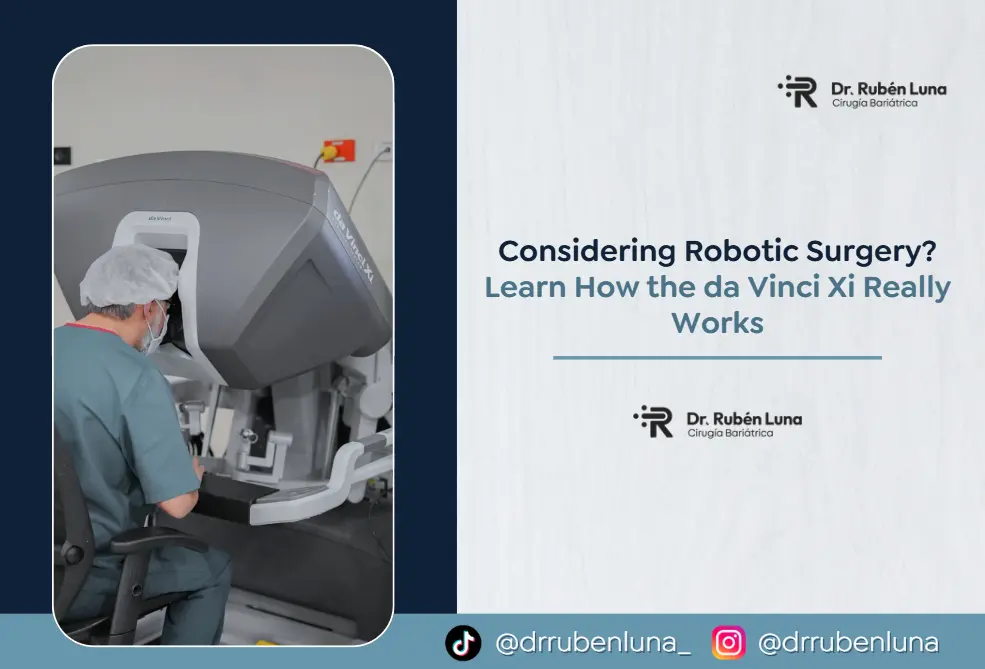
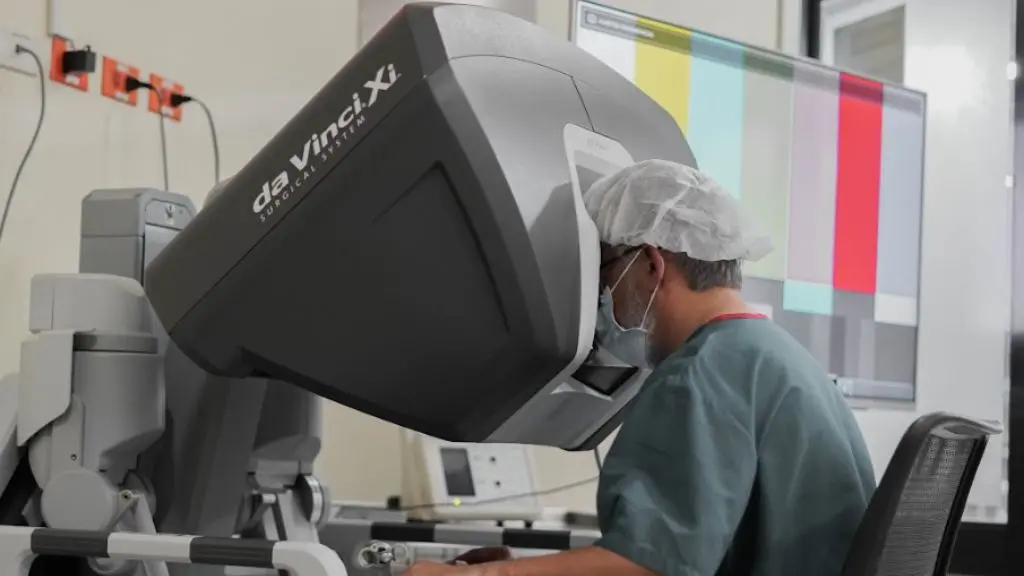
During surgery, I sit at a console located inside the operating room. From there, I view the surgical field through a highly magnified three-dimensional image with depth perception. This allows me to recognize anatomical structures, tissue planes, and the area being treated in greater detail than with the naked eye alone.
My hands operate controls that guide the instruments attached to the system’s robotic arms. These instruments have articulated tips that can bend and rotate inside the body, allowing movements that, in some situations, expand upon the natural range of the human wrist. The system translates my movements in real time while I remain in full control.
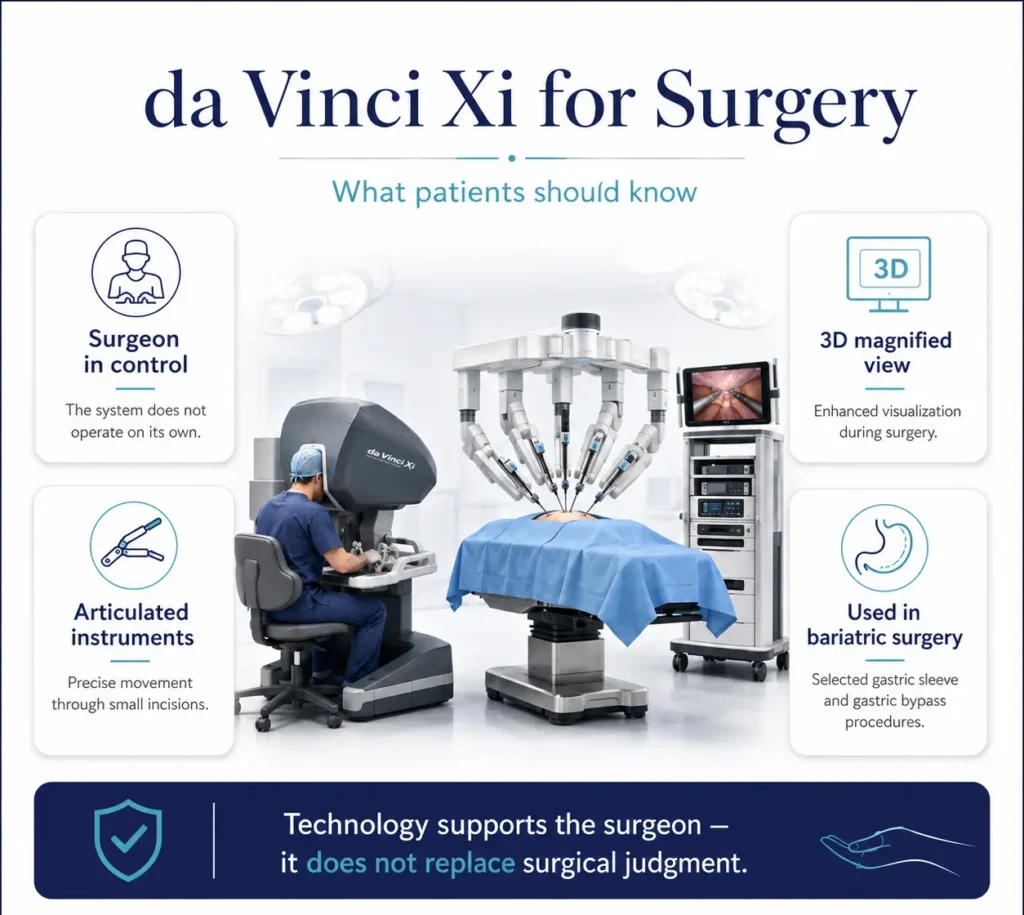
The system can be understood through three main components:
- Surgeon console: where the surgeon sees the operative field and controls the instruments.
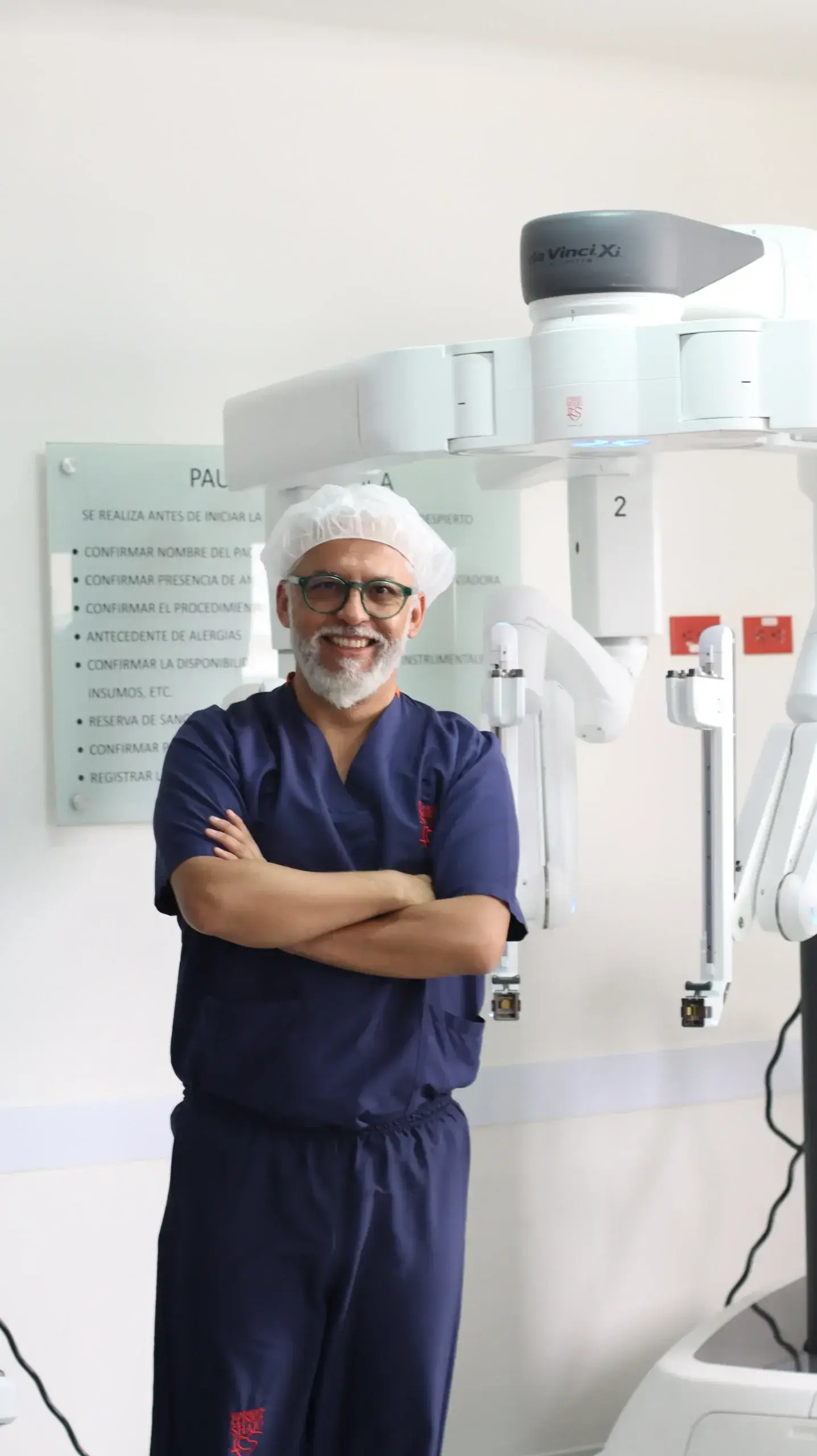
- Patient cart: the part positioned next to the patient, containing robotic arms and surgical instruments.
- Vision system: the equipment that processes and displays a magnified three-dimensional image.
The da Vinci Xi combines these components with advanced 3DHD vision and wristed instruments in a platform designed to provide access across different anatomical areas.
Why Can Greater Precision Matter During Minimally Invasive Surgery?
Minimally invasive surgery is performed through small incisions, which means the surgeon must work within a limited space. In these conditions, visibility, control, and freedom of movement can make an important difference.
The magnified three-dimensional view can help the surgeon identify structures and remain oriented within the anatomy. At the same time, articulated instruments can facilitate controlled dissection, suture, and tissue manipulation in areas that may be difficult to reach with rigid laparoscopic instruments.
This does not mean that robotic surgery automatically produces a better result for every patient. Precision depends on how the technology is used, the surgeon’s training and experience, the procedure being performed, and the patient’s individual condition.
What this means for you:
The da Vinci Xi is not valuable simply because it is a robot. Its real value lies in how an experienced surgeon uses its vision, instruments, and control capabilities to perform a carefully planned minimally invasive procedure.
You may be interested Robotic Bariatric Surgery: A Modern Approach to Weight Loss
Does the da Vinci Robot Perform Surgery by Itself?
One of the most common concerns I hear from patients is whether the robot can take over once the operation begins. It cannot. The da Vinci robot for surgery is a computer-assisted system that allows me to control specialized instruments through small incisions. It does not operate independently, and it cannot perform a procedure without direct human control.
Who Is Actually in Control During Robotic Surgery?
The surgeon is in control from the beginning of the operation until the procedure is complete. From the console, I use hand and foot controls to guide the camera and surgical instruments while viewing the operative area in three dimensions.
The system translates my movements into precise movements inside the patient’s body. It may help scale those movements and support greater control, but it does not create them. Every dissection, stitch, and adjustment begins with an intentional action from the surgeon.
This distinction matters because the safety of robotic surgery depends not only on the technology, but also on the surgeon’s judgment, training, and familiarity with the procedure being performed.
The key point:
The robot does not perform the operation. The surgeon performs the operation using the robot as an advanced surgical tool.
Can the Robot Make Decisions or Move Without the Surgeon?
No. The da Vinci Xi does not diagnose a medical condition, choose the most appropriate operation, or determine which tissue should be cut, preserved, or sutured.
Before surgery, I evaluate the patient, review the medical history and test results, and determine whether a robotic approach is appropriate. During the procedure, I interpret what I see and make every medical and surgical decision in real time.
The system cannot:
- Decide which procedure a patient needs.
- Identify tissue and act on it independently.
- Change the surgical plan by itself.
- Respond to an unexpected finding without the surgeon.
- Continue operating autonomously.
The FDA classifies these devices as computer-assisted surgical systems because they enable the surgeon to control and move instruments; they are not autonomous robots capable of performing surgery without direct human control.
What Happens If the Surgeon Stops Moving the Controls?
If I stop moving the controls, the instruments do not continue the surgical action on their own. They only respond to the movements I intentionally make at the console.
This is one of the clearest ways to understand the relationship between the surgeon and the technology: the system does not anticipate the next step or complete a movement independently. Its function is to translate the surgeon’s commands with precision.
As a pioneer in robotic bariatric surgery, I consider this an essential point for patients to understand. Technology can expand what a surgeon is able to see and control, but the surgeon’s hands, experience, and medical judgment remain at the center of the procedure.
Can Any Surgeon Use the da Vinci Robot for Surgery?
Access to a robotic surgical system does not automatically make someone an experienced robotic surgeon. Learning to use the da Vinci Xi surgical system requires specific technical training, supervised practice, and progressive experience in the procedure the surgeon intends to perform.
Just as importantly, the surgeon must already have a strong foundation in anatomy, minimally invasive surgery, and the management of possible complications. Technology adds capabilities, but it does not replace surgical expertise.
What Training Does a Surgeon Need Before Using the Da Vinci Xi?
Training generally begins with learning how the system works, including the console, instruments, camera, patient cart, and operating-room setup. Surgeons may then progress through online education, simulation exercises, hands-on practice, observation of experienced professionals, and supervised procedures.
Simulation is especially useful because it allows surgeons to practice instrument control, camera navigation, suturing, and other technical skills in a controlled environment before applying them during an operation. Intuitive states that physicians are responsible for obtaining sufficient training and proctoring before performing procedures with a da Vinci system.
A complete learning pathway may include:
- Technical instruction on the robotic platform.
- Practice using virtual simulation.
- Hands-on training with the instruments.
- Observation of robotic procedures.
- Supervised or proctored surgical cases.
- Progressive experience with a specific operation.
- Ongoing review and continued skills development.
Completing basic system training is only the starting point. A surgeon must also become proficient in performing a particular procedure robotically, because operating on the stomach is not the same as performing a urologic, gynecologic, or thoracic procedure.
Why Is Surgical Experience More Important Than Having Access to the Robot?
The robot can provide excellent visualization and highly articulated instruments, but it cannot interpret anatomy or recognize when the surgical plan needs to change. Those responsibilities belong to the surgeon.
Experience helps a surgeon know how to:
- Recognize normal and unexpected anatomy.
- Handle delicate tissues safely.
- Respond to bleeding or other intraoperative findings.
- Decide whether to modify the original plan.
- Determine when another surgical approach may be safer.
- Coordinate the entire operating-room team.
Clinical outcomes can be influenced by several factors, including the patient’s condition, the disease being treated, the procedure, and the surgeon’s experience.
In my practice, robotic technology is not used simply because it is available. I consider whether it offers a meaningful advantage for the individual patient and whether the planned technique can be performed safely.
Is Robotic Surgery Less Painful and Easier to Recover From?
Patients are naturally concerned about pain, scars, hospitalization, and the time it may take to return to daily life. Because robotic procedures are generally performed through small incisions, they may offer some of the benefits associated with minimally invasive surgery. Still, recovery is not determined by robots alone, and it is important to set realistic expectations.
Can Robotic Surgery Reduce the Size or Number of Incisions?
The da Vinci Xi surgical system is commonly used to perform operations through one or several small incisions rather than the larger incision usually required for open surgery. In appropriate cases, this minimally invasive approach may be associated with less tissue disruption, smaller scars, reduced postoperative discomfort, and a faster return to certain activities when compared with open surgery.
However, using the da Vinci Xi does not always mean that a procedure will require fewer incisions than conventional laparoscopy. The number, size, and location of the incisions depend on:
- The procedure being performed.
- The area of the body that must be reached.
- The instruments required.
- The patient’s anatomy.
- Previous surgeries or internal scar tissue.
- The surgeon’s planned technique.
- Any unexpected findings during the operation.
In my own field, I have pioneered a three-incision approach for selected robotic bariatric procedures. Even so, this technique must be recommended according to the individual case. Reducing the number of incisions should never take priority over completing the operation safely.
Does the da Vinci Xi Guarantee Fewer Complications?
No surgical system can guarantee a complication-free procedure. The da Vinci Xi may support precision, visualization, and instrument control, but it cannot eliminate the inherent risks of surgery.
Potential complications vary according to the operation and may include bleeding, infection, injury to nearby structures, blood clots, anesthetic complications, leakage after gastrointestinal surgery, or the need to modify the surgical approach.
It is also important to distinguish robotic surgery from minimally invasive surgery in general. Studies often report recovery advantages when minimally invasive procedures are compared with open surgery, but robotic techniques have not demonstrated uniform superiority over conventional laparoscopy across all specialties and procedures.
For this reason, I will explain potential benefits as possibilities—not promises.
What Really Determines the Safety of Robotic Surgery?
The safety of da Vinci robotic surgery depends on several connected decisions made before, during, and after the operation. Technology is only one part of that process.
Choosing the right patient
A complete evaluation helps determine whether surgery is appropriate and which technique offers the most reasonable balance between benefits and risks.
The surgeon’s training and experience
The surgeon must understand both the operation and the robotic platform. Experience is essential for recognizing anatomy, responding to unexpected findings, and knowing when the original plan should be changed.
Careful preoperative preparation
Medical tests, nutritional preparation, medication adjustments, anesthetic assessment, and control of existing conditions can all influence surgical safety.
The hospital and operating-room team
Robotic surgery requires more than a trained surgeon. It also depends on an experienced anesthesiology team, surgical assistants, nursing staff, appropriate equipment, and established protocols.
Postoperative monitoring and follow-up
Safe surgery does not end when the incisions are closed. Early mobilization, pain management, nutritional guidance, wound care, follow-up appointments, and knowing which warning signs require attention are all part of recovery.
The FDA similarly recommends discussing the surgeon’s training, experience, expected outcomes, risks, benefits, and alternative treatments before choosing a robotically assisted procedure.
What patients should remember:
Safety does not come from the robot alone. It comes from appropriate patient selection, an experienced surgeon, a prepared medical team, a high-quality institution, and structured follow-up.
Robotic Surgery in Bogotá: da Vinci Xi Technology for Bariatric Procedures
For patients considering robotic surgery in Bogotá, access to the da Vinci Xi means combining advanced technology with experienced medical care. In my practice, I use this platform for selected bariatric procedures, including gastric sleeve and gastric bypass, when the patient’s anatomy, health history, and surgical goals make it an appropriate option. I have also pioneered a three-incision robotic technique for selected cases, designed to maintain a minimally invasive approach while prioritizing safety and surgical control.
For international patients, traveling for surgery can feel overwhelming, so the process should never begin at the operating room door. Our team can support you with virtual evaluation, preoperative preparation, travel and accommodation guidance, hospital coordination, multidisciplinary follow-up, and remote checkups after you return home. The goal is to help you feel informed, accompanied, and confident at every stage of your care.
Frequently Asked Questions About the Da Vinci Robot for Surgery
1. Does the da Vinci robot perform surgery on its own?
No. The da Vinci Xi does not operate independently. The surgeon controls the camera and instruments from a console throughout the entire procedure. Every movement inside the patient’s body begins with a deliberate movement made by the surgeon.
The system does not diagnose conditions, select a procedure, or decide where to cut or place a suture. It is a sophisticated surgical tool—not an autonomous surgeon.
2. Is the da Vinci Xi an artificial intelligence system?
The da Vinci Xi surgical system is not an artificial intelligence system that makes medical decisions. It is a computer-assisted platform that translates the surgeon’s hand movements into controlled movements of the surgical instruments.
Although the system includes advanced software and technology, the surgeon remains responsible for interpreting the anatomy, making decisions, and managing every stage of the operation.
3. What is the main benefit of using the da Vinci robot for surgery?
The main benefit is the combination of magnified three-dimensional visualization, articulated instruments, and precise control during minimally invasive surgery.
These features may help the surgeon work in narrow spaces, perform delicate dissection, and complete suturing with greater freedom of movement. However, the potential benefit depends on the type of procedure, the patient’s condition, and the surgeon’s experience.
4. Is robotic surgery safer than traditional surgery?
Robotic surgery is not automatically safer than every laparoscopic or open procedure. Safety depends on the operation being performed, the patient’s health, the surgeon’s training, the hospital, and the medical team.
For some patients, a robotic approach may offer advantages. For others, conventional laparoscopy or open surgery may be more appropriate. The safest technique is the one selected after an individual medical evaluation.
5. Does robotic surgery always cause less pain?
Not necessarily. Because robot-assisted procedures are usually performed through small incisions, some patients may experience less discomfort than they would after open surgery.
However, pain levels vary according to the procedure, the number and location of the incisions, the patient’s individual response, and the postoperative care plan. Technology cannot guarantee that every patient will have less pain.
6. Does the da Vinci Xi always require fewer incisions?
No. The number of incisions depends on the operation, the instruments required, the patient’s anatomy, and the surgeon’s technique.
In my bariatric practice, I have pioneered a three-incision robotic approach for selected patients. However, this technique is not appropriate for every case. The priority is always to perform the procedure safely, even if additional access is needed.
7. What procedures can be performed with robot-assisted surgery?
The da Vinci Xi may be used in several specialties, including general surgery, urology, gynecology, colorectal surgery, thoracic surgery, and bariatric surgery.
Within bariatric surgery, the platform can be used for procedures such as gastric sleeve, gastric bypass, and selected revision operations. The choice depends on the patient’s diagnosis, anatomy, previous procedures, and treatment goals.
8. How much training does a surgeon need to use the da Vinci Xi?
A surgeon needs specific training in the robotic platform, which may include theoretical education, simulation, hands-on practice, observation, and supervised procedures.
Training on the system alone is not enough. The surgeon must also have experience in the specific operation being performed. A professional may understand how to control the robot but still need additional experience to perform a complex procedure safely and confidently.
9. How do I know whether robotic surgery is right for me?
The decision should be made after a complete medical evaluation. Your surgeon must consider your diagnosis, medical history, previous operations, anatomy, medications, and the expected benefits and risks of each available approach.
During your consultation, ask why robot-assisted surgery is recommended for your specific case and what alternatives are available. The recommendation should be based on your needs—not simply on access to technology.
10. Can international patients have robotic bariatric surgery in Bogotá?
Yes. International patients may be evaluated for robotic surgery in Bogotá, including selected bariatric procedures. The process can begin with a virtual consultation, review of medical records, and guidance on the tests required before traveling.
Our team can also assist with preoperative preparation, hospital coordination, accommodation guidance, multidisciplinary follow-up, and remote checkups after the patient returns home. The purpose of this support is to make robotic bariatric surgery in Colombia a structured and carefully monitored medical process rather than an isolated trip for an operation.