Does Bariatric Surgery Shorten Your Life? A Bariatric Surgeon Explains
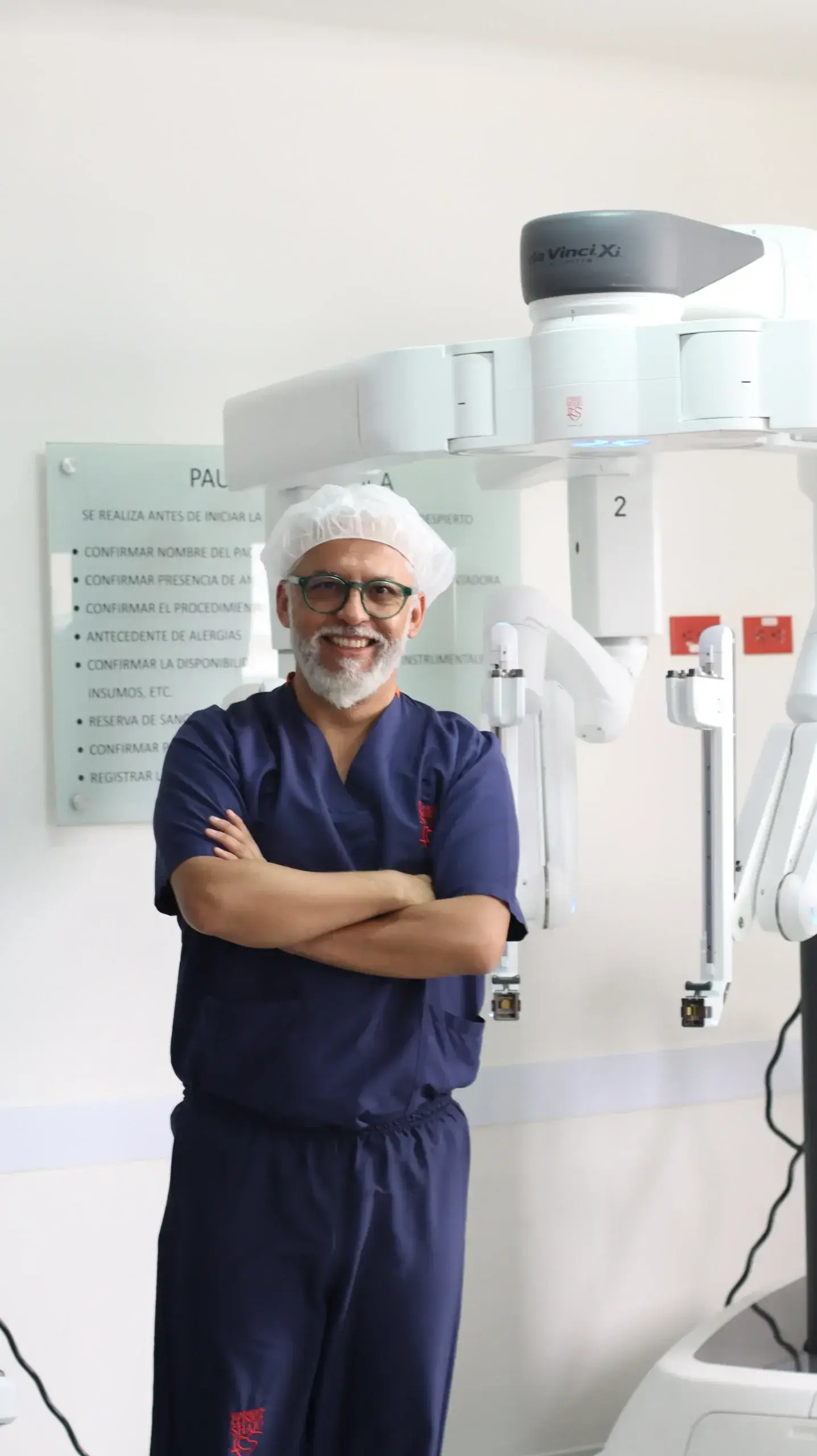
Medical author
Dr. Rubén Luna
Bariatric Surgeon
Global Obesity Group · Bogotá, Colombia
Have you ever wondered if weight loss surgery could take years away from your life instead of giving them back? This is one of the most common fears I hear from patients during consultation. The direct answer to does bariatric surgery shorten your life is no: when bariatric surgery is properly indicated by an experienced bariatric surgeon, and supported by a complete medical follow-up program, it does not shorten your life. In many patients, it can do the opposite to help protect long-term health by reducing obesity-related diseases that may affect life expectancy.
As a bariatric surgeon, I always explain that the real risk is not only the surgery itself but living for years with untreated obesity and its consequences. Obesity can be linked to type 2 diabetes, high blood pressure, sleep apnea, cardiovascular disease, joint damage, and a lower quality of life. That is why bariatric surgery should not be seen as a cosmetic shortcut, but as a medical process designed to help patients lose weight, improve their health, reduce comorbidities, and potentially live longer, healthier lives. If you are considering bariatric surgery, the first step is a personalized medical evaluation to understand your case and define the safest path forward.
Why obesity can shorten life expectancy
Many patients worry about the risks of surgery, and that fear is understandable. But in consultation, I often invite them to look at the complete picture: untreated obesity also has risks, and those risks can quietly progress over time. Obesity is a chronic disease, not a lack of discipline, and it can affect the body far beyond the number on the scale. When we discuss does bariatric surgery shorten your life, we also need to talk about what can happen when obesity is left untreated for years.
Obesity is not just a matter of weight
Obesity can affect the way your body functions every day. It can interfere with metabolism, increase the workload on the heart, make breathing more difficult during sleep, place pressure on the joints, reduce mobility, and limit the activities that once felt simple. For many patients, the problem is not only gaining weight; it is losing energy, independence, confidence, and control over their health.
From a medical perspective, the concern is not only excess weight. The concern is what that weight may be doing to your organs, your metabolism, your sleep, and your long-term quality of life.
Health conditions linked to obesity
Obesity can increase the risk of several conditions that may reduce both life expectancy and quality of life. Some of the most common include:
- Type 2 diabetes: excess weight can affect how the body uses insulin, making blood sugar harder to control over time.
- Hypertension: the heart and blood vessels may work under greater pressure, increasing cardiovascular risk.
- Cardiovascular disease: obesity can contribute to heart disease, circulation problems, and other serious complications.
- Sleep apnea: many patients stop breathing repeatedly during sleep, which affects oxygen levels, rest, energy, and heart health.
- Fatty liver disease: fat accumulation in the liver can progress silently and may lead to more serious liver problems.
- Joint pain and reduced mobility: extra weight places more pressure on the knees, hips, spine, and feet, making movement more difficult.
- Chronic inflammation: obesity can create a persistent inflammatory state that affects different systems in the body.
When weight starts affecting your health
When excess weight is already associated with diabetes, high blood pressure, sleep apnea, joint pain, fatigue, difficulty walking, or reduced quality of life, waiting is not always the safest option. Seeking medical help is not an extreme decision; it is often a preventive one. A personalized bariatric evaluation allows us to understand your health risks, review your medical history, and determine whether bariatric surgery or another treatment path may help protect your future health.
You may be interested Bariatric Surgery Benefits: Why Choose Colombia?
How bariatric surgery can help patients live longer and healthier
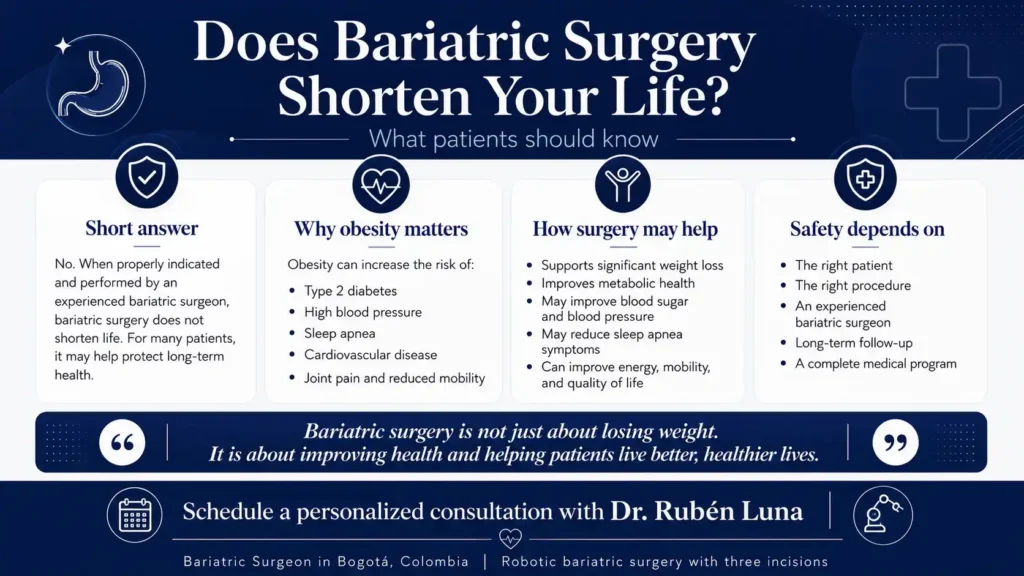
Bariatric surgery does not help patients live longer by chance. It can do so because it addresses one of the root causes behind many serious health problems: obesity. When a patient loses significant weight and improves their metabolic health, the body often begins to function better. This can reduce the impact of diseases that may shorten life, such as type 2 diabetes, high blood pressure, sleep apnea, and cardiovascular risk factors. That is why, when patients ask me does bariatric surgery shorten your life, I explain that the real goal of surgery is not simply to lose weight, but to protect health over time.
Bariatric surgery supports sustained weight loss
Procedures such as gastric sleeve and gastric bypass are designed to help patients achieve significant and sustain weight loss. However, the surgery is only one part of the process. The best outcomes happen when the procedure is combined with nutritional guidance, psychological support, physical activity, and long-term medical follow-up.
This is important because obesity is not treated only in the operating room. Surgery creates a powerful opportunity for change, but the patient’s habits, follow-up appointments, emotional health, and commitment to the process all play an essential role in maintaining results over time.
It can improve or reduce obesity-related diseases
One of the most meaningful benefits of bariatric surgery is that it can help improve conditions associated with obesity. In many patients, weight loss and metabolic changes after surgery can support better control of several health problems.
| Health area | How bariatric surgery may help |
|---|---|
| Blood sugar control | It may improve insulin sensitivity and help some patients reduce the impact of type 2 diabetes. |
| Blood pressure | Weight loss can reduce the workload on the heart and blood vessels. |
| Sleep apnea symptoms | Losing weight may improve breathing during sleep and daily energy levels. |
| Mobility | Less weight on the joints can make walking, exercising, and daily movement easier. |
| Cardiovascular risk factors | It may help improve risk factors related to heart and vascular health. |
| Daily function | Many patients experience better energy, less fatigue, and greater independence. |
These changes are not automatic, and they are not the same for every patient. But when bariatric surgery is properly indicated and followed by a complete medical program, it can become a turning point in a patient’s long-term health.
More years, but also better years
When we talk about life expectancy, we should also talk about quality of life. Living longer matters, but living with better mobility, less pain, better breathing, more energy, and greater control over your health matters too.
For many patients, bariatric surgery is not only about seeing a different number on the scale. It is about being able to walk without getting exhausted, sleeping better, reduce medication in selected cases, move with less discomfort, travel more comfortably, play with their children, return to activities they had abandoned, and feel that their body is no longer limiting every decision.
The purpose of bariatric surgery is not only to add years to life, but to help patients recover the health, mobility, and confidence they may have lost because of obesity.
The importance of long-term follow-up
Bariatric surgery does not end when the operation is over. In fact, the months after surgery are essential for building the habits that will support long-term success. Nutrition, hydration, physical activity, vitamin supplementation, emotional support, and regular medical controls are all part of the process.
This is why I always tell my patients that surgery is not a shortcut; it is a medical tool that works best when it is part of a structured, personalized plan. A personalized evaluation can help determine whether bariatric surgery is the right option for your health, your risks, and your long-term goals.
Is bariatric surgery safe? Understanding risks and benefits
One of the most common questions I hear from patients is: “Doctor, is bariatric surgery dangerous?” My answer is always honest: every surgery has risks. But the decision should not be based on fear alone. It should be based on a complete medical evaluation, because living for years with untreated obesity also carries real risks. In fact, long-term medical research has shown that bariatric surgery may be associated with longer life expectancy compared with usual obesity care in patients with obesity. This does not mean surgery eliminates every risk, but it does help us understand why, for the right patient, bariatric surgery can be a health-protective decision.
Every surgery has risks, but obesity also has risks
It would not be responsible to say that bariatric surgery is risk-free. No surgical procedure is. However, it would also be incomplete to ignore the accumulated risk of obesity-related diseases such as type 2 diabetes, hypertension, sleep apnea, cardiovascular disease, fatty liver disease, and joint degeneration.
When a patient asks me does bariatric surgery shorten your life, I explain that the question should be approached differently: What is the safest path for your health in the long term? For some patients, the greater danger is not having surgery but allowing obesity and its associated conditions to continue progressing without effective treatment.
Research published in medical literature has also highlighted that obesity can deeply affect quality of life, including mobility, pain, sleep, energy, daily function, and emotional well-being. That is why safety should not be measured only by surgical risk. It should also consider the risk of doing nothing when obesity is already affecting your health.
Why medical evaluation is essential
Not every patient needs the same procedure, and not every patient is automatically a candidate for surgery. A bariatric evaluation allows us to understand the complete clinical picture and determine whether surgery is appropriate, which procedure may be safer, and what type of follow-up the patient will need.
During this evaluation, we analyze several factors:
- BMI: to understand the degree of obesity and possible surgical indication.
- Medical history: including previous diagnoses, surgeries, medications, and risk factors.
- Current diseases: such as diabetes, hypertension, sleep apnea, heart disease, or fatty liver disease.
- Previous weight-loss treatments: to understand what has been tried before and why it may not have worked.
- Nutritional status: because deficiencies or eating patterns must be addressed before and after surgery.
- Emotional readiness: since long-term success also depends on psychological and behavioral support.
- Surgical risk: to determine the safest approach for each individual patient.
Robotic bariatric surgery and minimally invasive techniques
Bariatric surgery has evolved significantly. Today, minimally invasive and robotic techniques allow surgeons to perform procedures with greater precision, better visualization, and smaller incisions compared with older surgical approaches.
In my practice, robotic bariatric surgery with a three-incision technique represents an important advancement for selected patients. This approach may support less tissue trauma, smaller scars, less postoperative discomfort, and a faster recovery process. The robotic platform also gives the surgeon enhanced precision, which is especially valuable in delicate procedures that require careful movement and control.
The safest surgery is the one that is properly indicated
Bariatric surgery should never be rushed. It should be part of a complete medical plan designed to reduce risk, improve health, and support long-term results. The safest surgery is not simply the most advanced one; it is the one that is properly indicated for your body, your medical history, your current diseases, and your long-term goals.
For many patients, bariatric surgery is not about taking dangerous steps. It is about choosing a structured, medically guided path to reduce the risks that obesity may already be creating. A personalized evaluation is the first step to understanding whether this treatment is right for you and how to approach it safely.
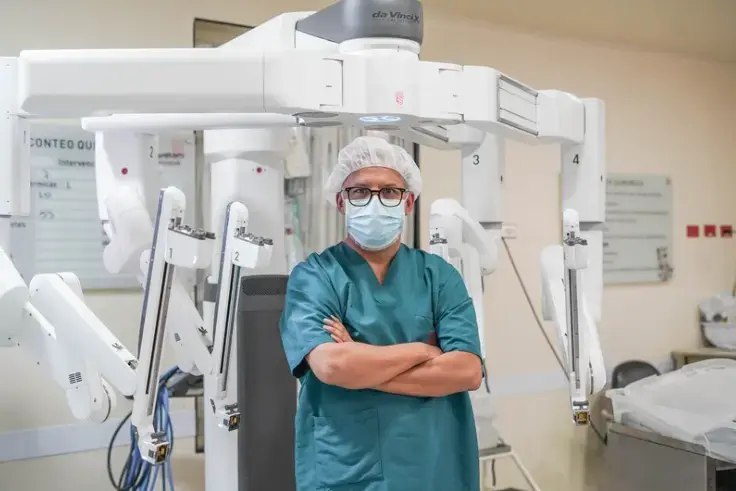
Dr. Rubén Luna: Bariatric surgery in Bogotá, Colombia with experience, technology, and comprehensive care
As a bariatric surgeon in Bogotá, Colombia, with more than 17 years of experience and more than 4,500 patients treated, I understand that choosing surgery is not an easy decision. That is why my approach is based on experience, technology, and close medical support. I currently practice in high-level medical institutions such as Clínica Shaio and, as cofounder of Global Obesity Group, I work with a multidisciplinary team that supports each patient before, during, and after surgery.
One of the techniques I perform is robotic bariatric surgery with three incisions, a minimally invasive approach designed to offer greater precision, smaller scars, less postoperative discomfort, and faster recovery in selected patients. For local and international patients, the process may include virtual orientation, medical coordination, nutritional and psychological support, postoperative follow-up, and long-term guidance. If you are considering bariatric surgery in Colombia, a personalized consultation is the safest first step to understand your case and determine whether robotic bariatric surgery is right for you.
Frequently Asked Questions About Bariatric Surgery and Life Expectancy
Does bariatric surgery shorten your life?
No. When bariatric surgery is properly indicated, performed by an experienced bariatric surgeon, and followed by a complete medical program, it does not shorten your life. In many patients, it may help protect long-term health by supporting significant weight loss and improving obesity-related diseases that can affect life expectancy.
Can bariatric surgery help you live longer?
For many patients, bariatric surgery may contribute to a longer and healthier life because it can reduce the impact of conditions linked to obesity, such as type 2 diabetes, high blood pressure, sleep apnea, fatty liver disease, and cardiovascular risk factors. It is not a guarantee, but when combined with medical follow-up and lifestyle changes, it can become a powerful tool to protect health over time.
What is more dangerous: obesity or bariatric surgery?
Both obesity and surgery have risks, but they are different types of risks. Surgery has short-term surgical risks that must be carefully evaluated, while untreated obesity can create long-term risks that may progress silently for years. A personalized bariatric evaluation helps determine whether the benefits of surgery outweigh the risks in each individual case.
Can bariatric surgery improve obesity-related diseases?
Yes. Bariatric surgery can help improve or reduce several obesity-related conditions, especially when it is part of a complete medical plan. Many patients experience better blood sugar control, lower blood pressure, improved sleep apnea symptoms, less joint pain, better mobility, and more energy for daily activities. The degree of improvement depends on each patient’s health status and follow-up.
Is bariatric surgery only about losing weight?
No. Weight loss is an important part of the process, but bariatric surgery is mainly a medical treatment for obesity and its related health conditions. The goal is not only to reduce body weight, but to improve metabolism, lower health risks, increase mobility, support better daily function, and help the patient build a healthier long-term lifestyle.
Is robotic bariatric surgery safer?
Robotic bariatric surgery may offer important advantages in selected patients, such as enhanced precision, better visualization, smaller incisions, less tissue trauma, and potentially faster recovery. However, safety does not depend only on technology. It also depends on the patient’s condition, the surgeon’s experience, the procedure selected, and the quality of postoperative follow-up.
How do I know if I am a candidate for bariatric surgery?
The only way to know is through a personalized bariatric evaluation. During this consultation, the surgeon reviews your BMI, medical history, current diseases, previous weight-loss attempts, nutritional status, emotional readiness, and surgical risk. This information helps define whether surgery is appropriate and which procedure may be safest for your case.
Can bariatric surgery improve quality of life?
Yes. Many patients report improvements in mobility, energy, breathing, sleep, joint discomfort, self-confidence, and independence after bariatric surgery. Quality of life matters because living longer is not the only goal; patients also want to live better, move more comfortably, reduce limitations, and regain control over their health.
What happens if obesity is not treated?
Untreated obesity can increase the risk of type 2 diabetes, hypertension, cardiovascular disease, sleep apnea, fatty liver disease, joint damage, chronic inflammation, and reduced mobility. Over time, these conditions may affect both life expectancy and quality of life. Seeking medical help is not an extreme decision; it can be a preventive step.
Can international patients travel to Colombia for bariatric surgery?
Yes. International patients can travel to Colombia for bariatric surgery after a complete medical evaluation and proper coordination. The process may include virtual orientation, medical planning before traveling, surgical scheduling, support with logistics, postoperative follow-up, and remote guidance after returning home. The goal is to make the process safe, organized, and medically supervised from the beginning.
References
- Carlsson, L. M., Sjöholm, K., Jacobson, P., Andersson-Assarsson, J. C., Svensson, P. A., Taube, M., … & Peltonen, M. (2020). Life expectancy after bariatric surgery in the Swedish obese subjects study. New England Journal of Medicine, 383(16), 1535-1543.
- Livingston, E. H., & Fink, A. S. (2003). Quality of life: cost and future of bariatric surgery. Archives of Surgery, 138(4), 383-388.